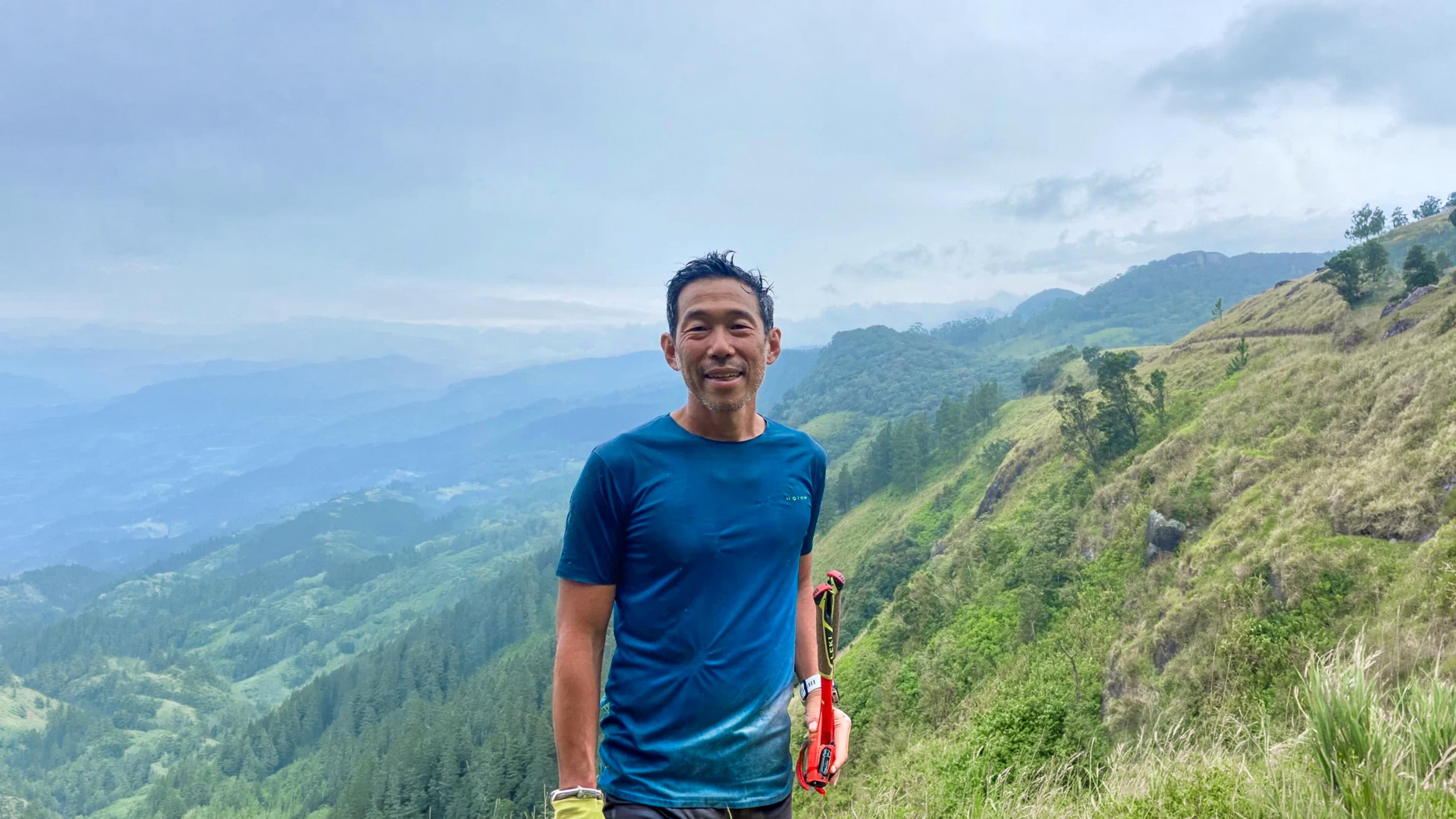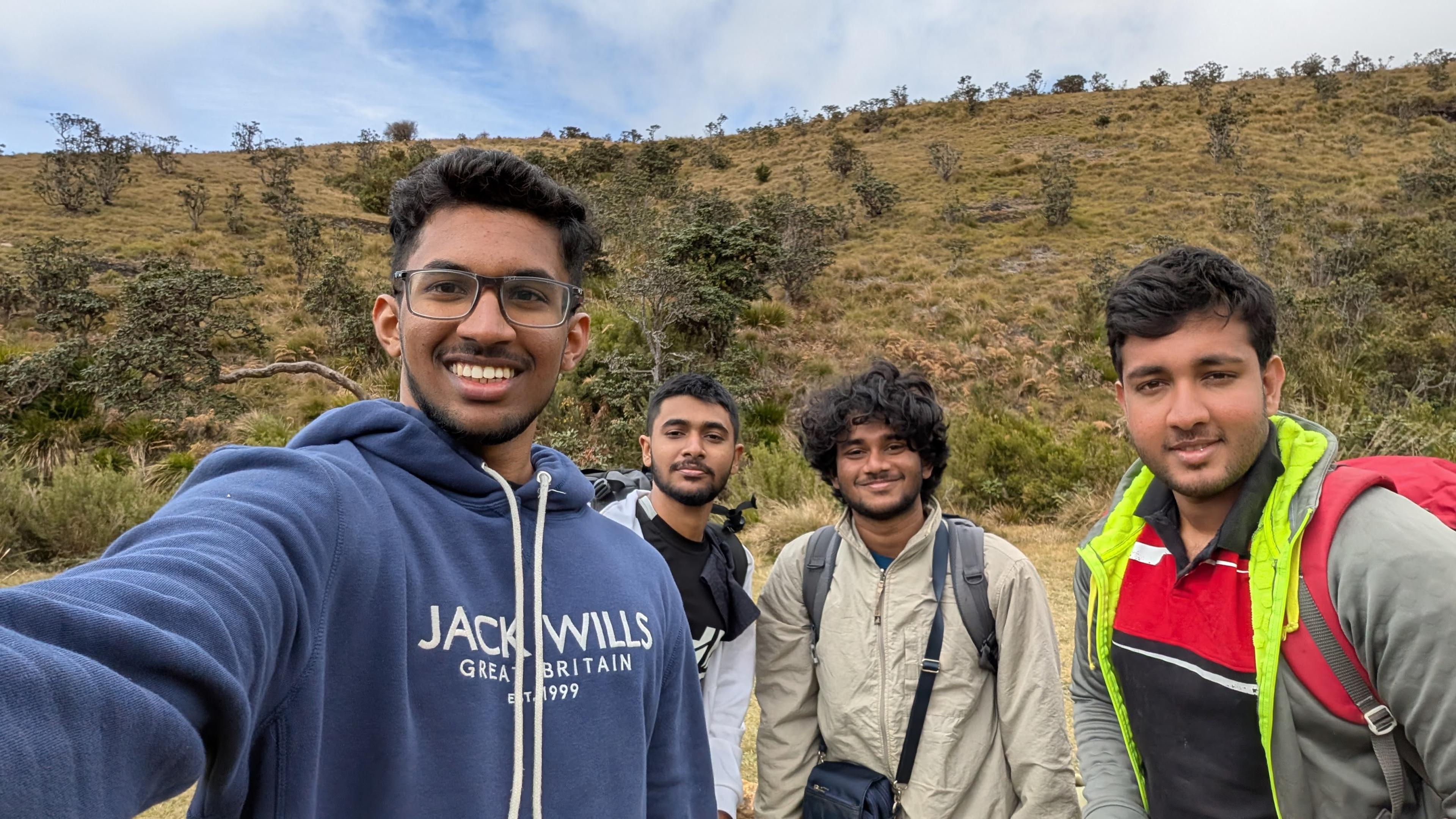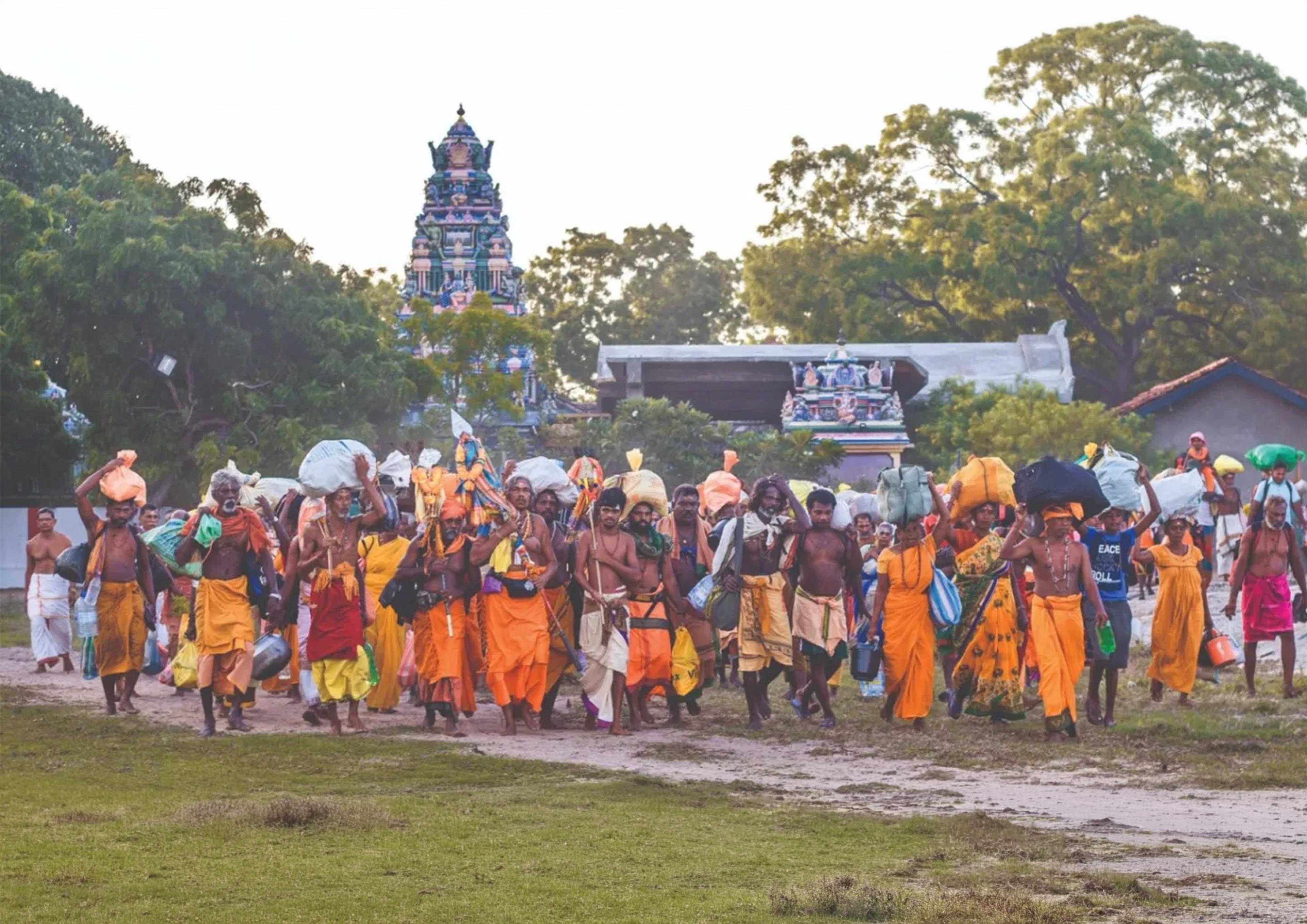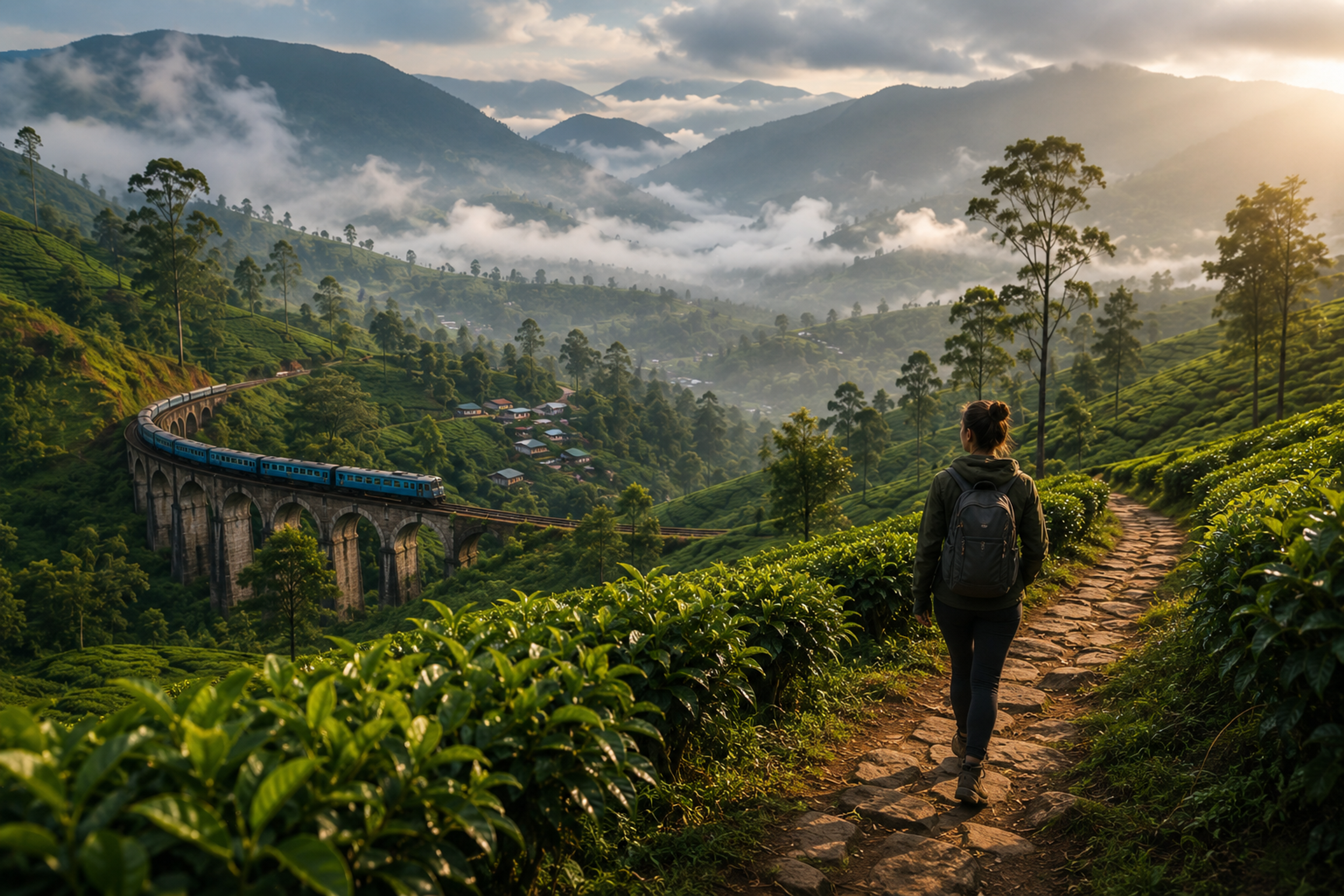
Stretching roughly 300 kilometers across Sri Lanka’s central highlands, this long-distance route connects Kandy to the hill country heartlands like Nuwara Eliya, Haputale, and Ella. It passes through 22 curated stages, each one blending tea estates, mountain ridges, colonial railway lines, forests, and remote villages that still wake up with the sound of bells and mist.
But none of that really explains why people are suddenly obsessed with it.
Because the Pekoe Trail isn’t trending for what it is on paper. It’s trending for what it does to people while they’re walking it.
It Starts Like a Walk… Until It Doesn’t Feel Like One Anymore
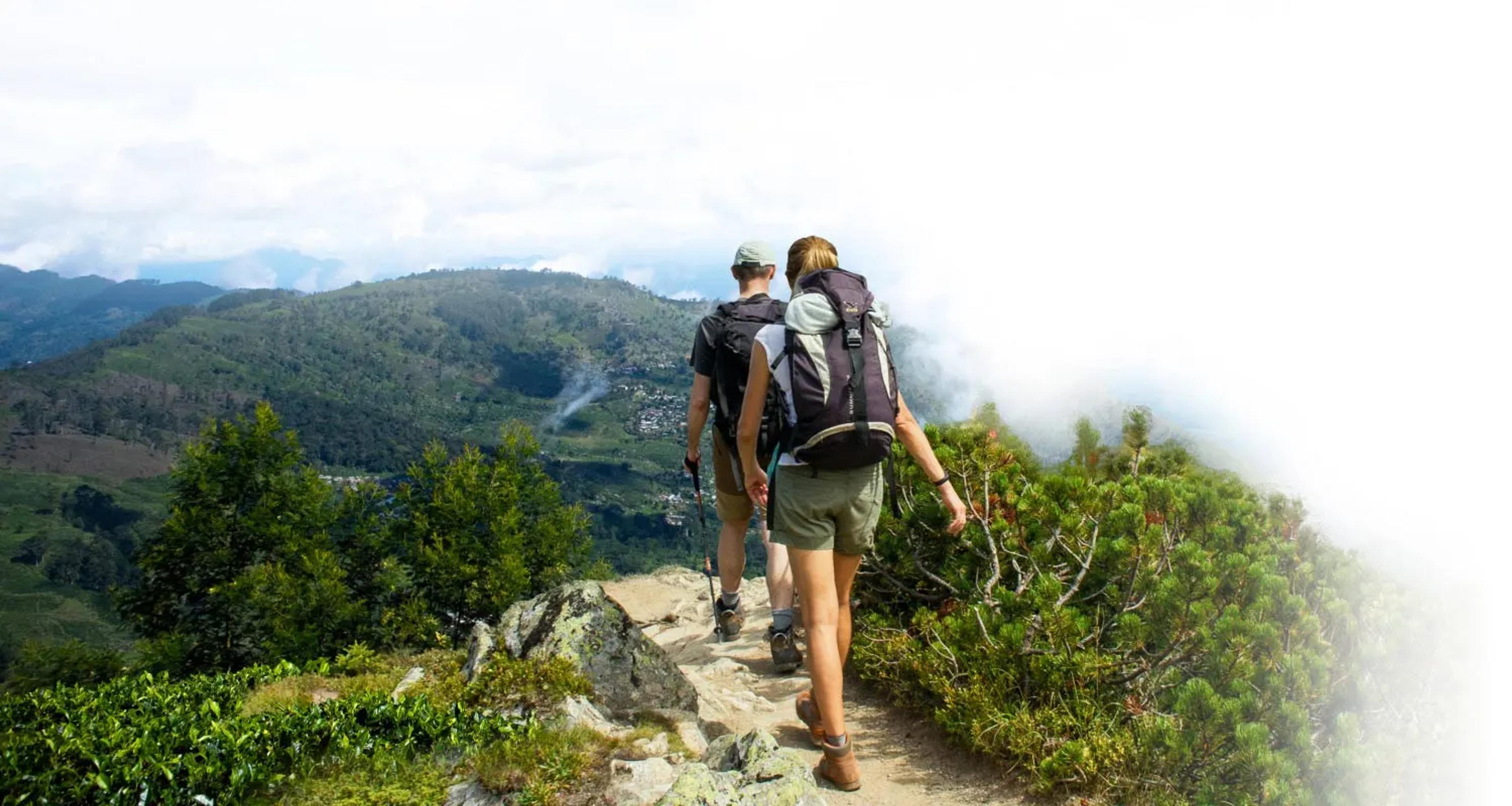
Most people begin the Pekoe Trail thinking it’s just another hiking experience in Sri Lanka’s hill country. A scenic walk. A weekend activity. Nature escaped. But the trail has a way of slowly removing that idea from your mind.
The first few kilometers feel familiar tea estates stretching like green oceans, small village roads cutting through hills, workers picking leaves with quiet precision. Sri Lanka produces some of the world’s finest tea, and this entire region is built around that history especially in places like Nuwara Eliya District, often called “Little England” because of its colonial past and cool climate.
Then the walk starts to stretch. And something shifts. The noise of planning disappears. The need to check distance fades. Even the urge to take photos every few minutes slows down.
You don’t notice it immediately, but you’ve already started walking differently.
Why the Pekoe Trail Is Becoming a Global Travel Obsession
The reason this trail is going viral in the travel world isn’t just because it’s beautiful. It’s because global travel trends are changing.
People are moving away from fast tourism, ticking off places like items on a list and shifting toward slow travel experiences in nature. And the Pekoe Trail fits that shift perfectly.
It offers something most destinations don’t:
- Time without pressure
- Landscapes without crowds
- Movement without rush
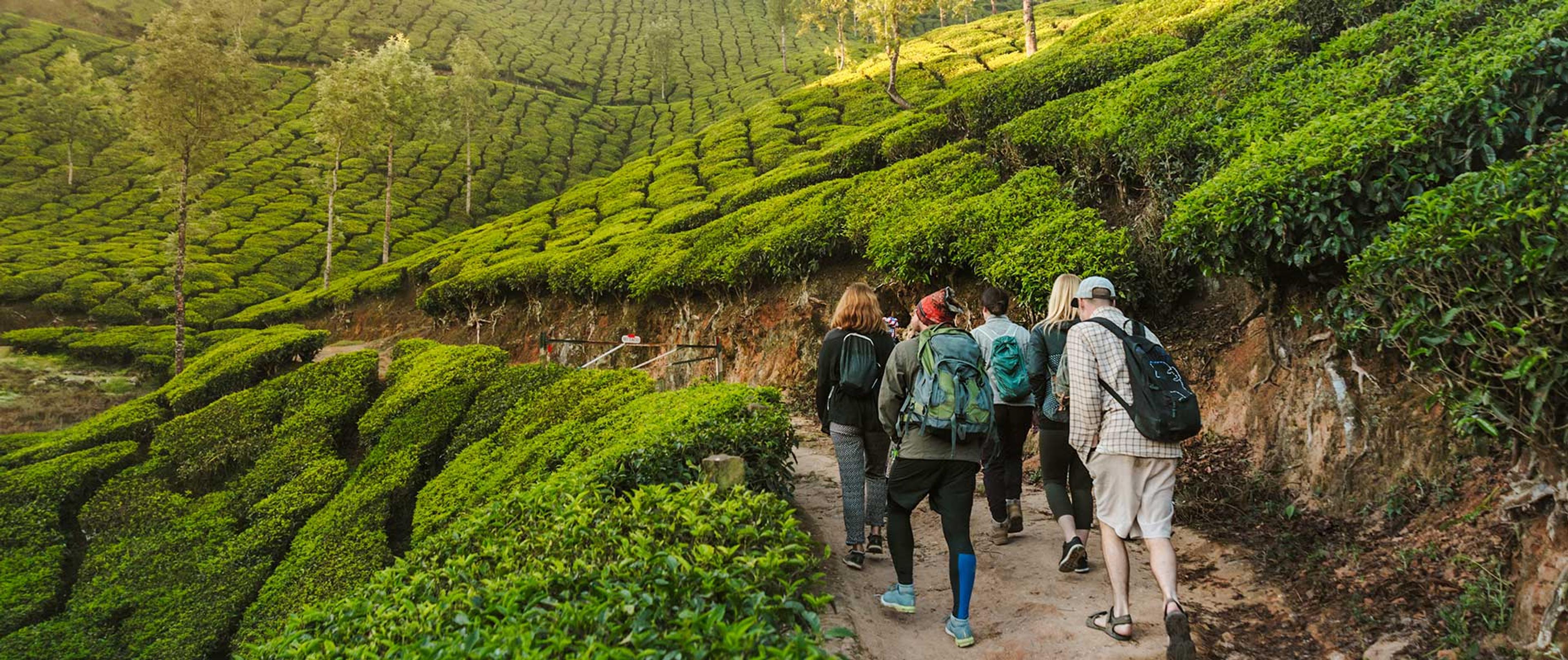
Across 22 stages, no two sections feel the same. One moment you’re walking through dense tea plantations in the central hills, where plantations date back to the British colonial era in the 19th century.
Next, you’re on narrow ridges where mist rolls in so fast it erases the world in seconds.
Then suddenly, you’re passing through a village where life feels unchanged for decades. It doesn’t feel curated. It feels like lived in.
The Trail Is Not One Experience - It’s Many Small Lives
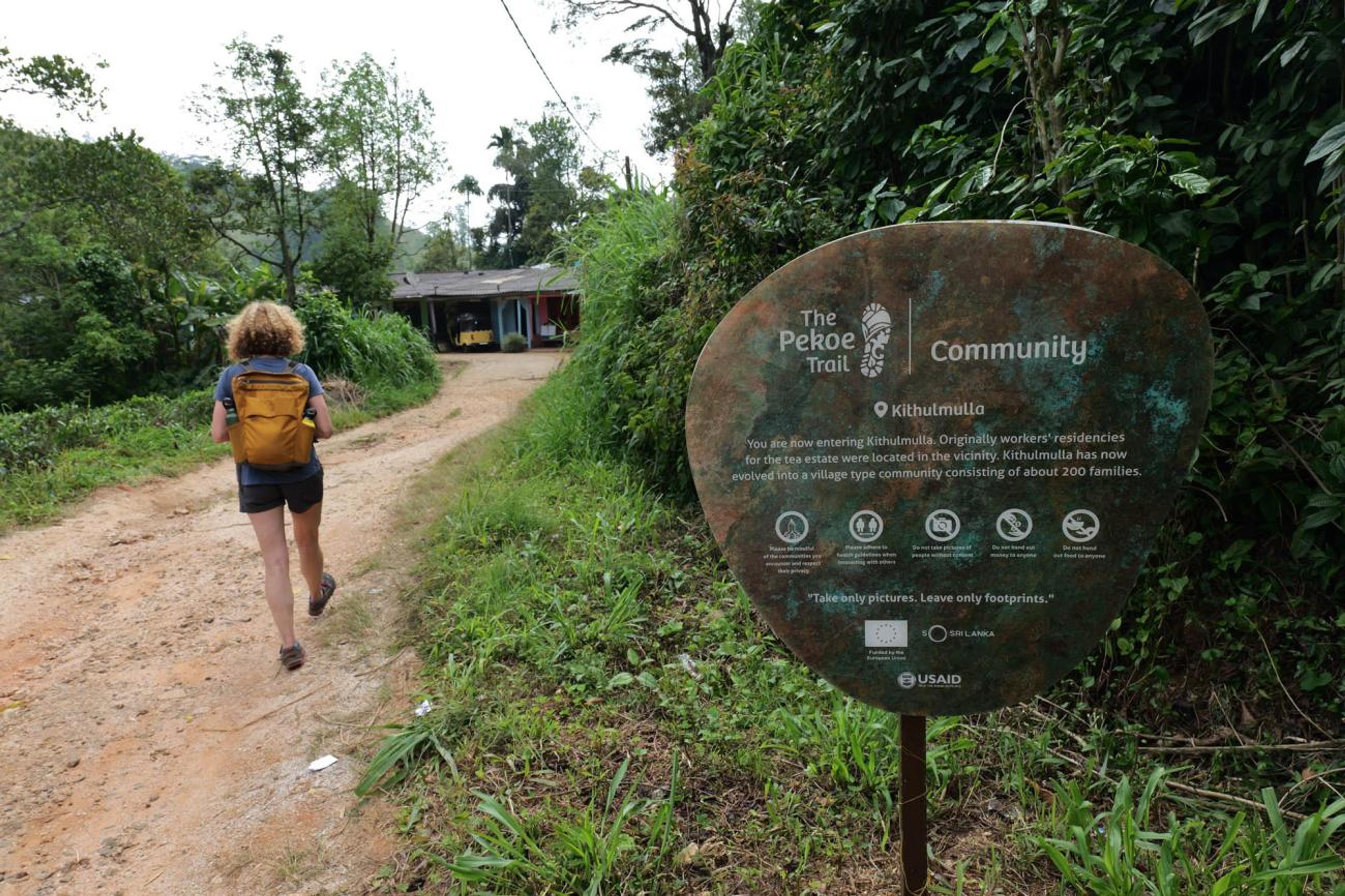
The Pekoe Trail is not designed as a single hike. It is broken into manageable stages, usually 10–20 km per section, making it accessible even for beginner hikers with moderate fitness. Some sections feel soft and easy tea country paths where the ground is forgiving, and the views do most of the work.
Others are demanding steep climbs, unpredictable weather, and long stretches where silence becomes the only companion.
But what makes it unique is not difficult. It’s variety.
Because no matter which stage you walk, you’re always moving through a living system:
- tea estates that still function daily
- railway lines that still carry local life
- villages that still depend on footpaths more than roads
This isn’t a recreational experience.
The Weather Becomes Part of the Story
In the central highlands of Sri Lanka, weather doesn’t behave politely. A clear sky can turn into thick mist in minutes. Sunlight can disappear behind clouds that move like slow smoke across the hills. And rain doesn’t announce itself it just arrives.
On the Pekoe Trail, this unpredictability is not an obstacle. It becomes part of the narrative. A dry path suddenly becomes reflective. Tea fields blur into soft green waves. And visibility drops until the world feels closer than it is. That’s when most hikers realize something important: This trail is not about control. It’s about acceptance.
Why Travelers Are Calling It “Sri Lanka’s Slow Revolution”
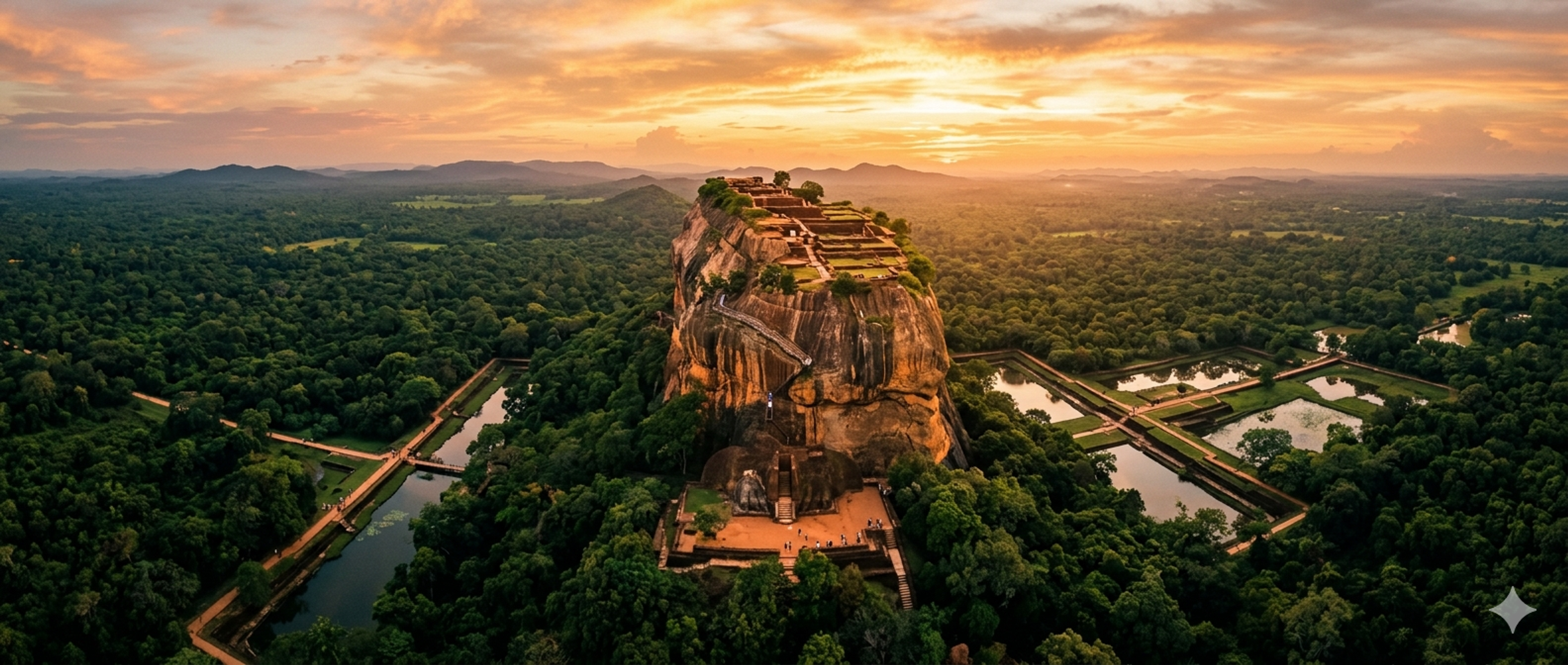
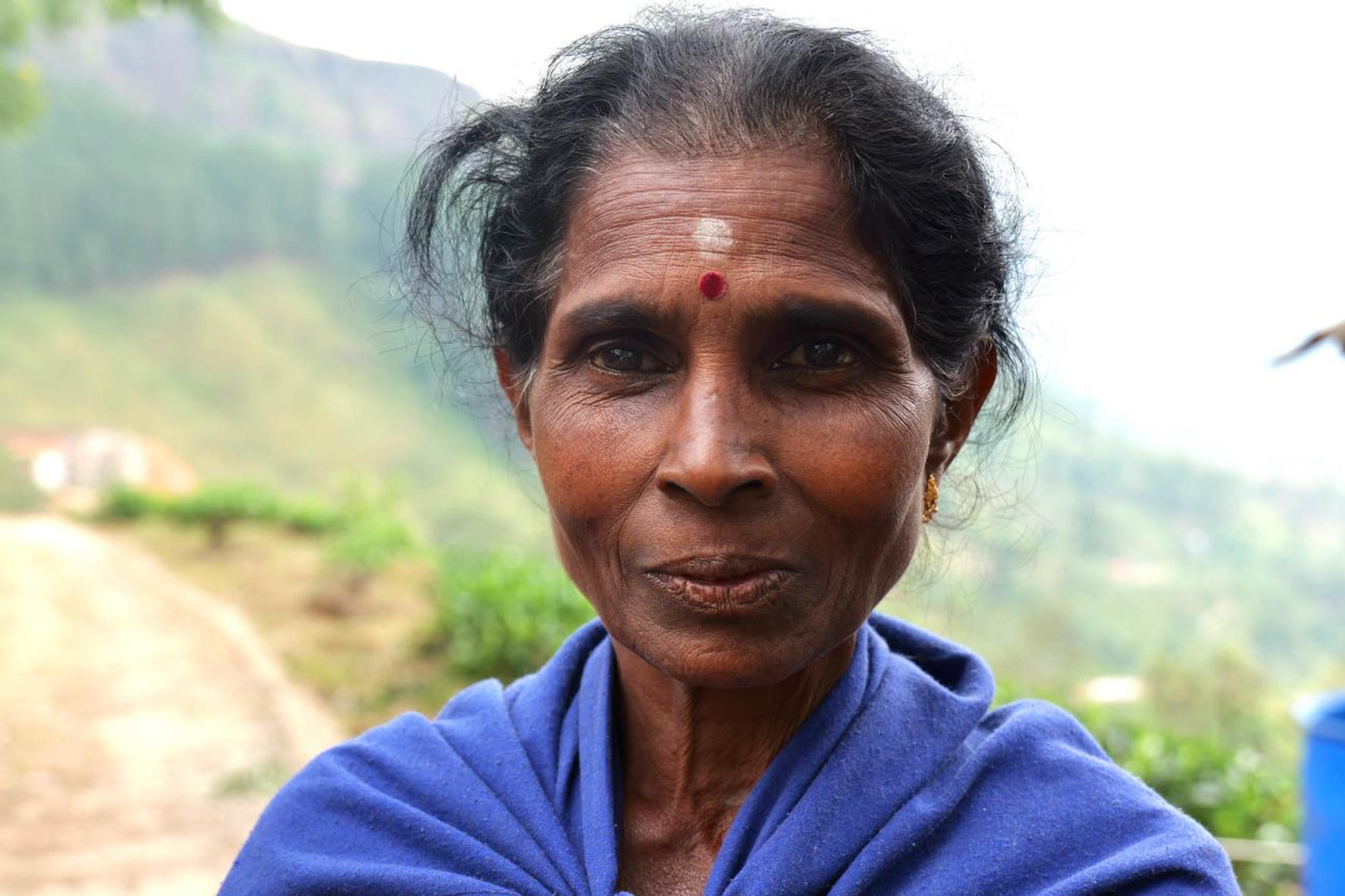
Sri Lanka has always been known for its iconic destinations beaches in the south, wildlife safaris, and cultural landmarks like Sigiriya. But the Pekoe Trail represents a different kind of tourism movement. It supports sustainable, low-impact travel, encouraging visitors to spread across rural highland communities rather than concentrate in overcrowded hotspots. Local homestays, tea estate workers, small village shops, and guides all benefit directly from this model. And that’s one of the reasons it’s gaining attention internationally not just as a hiking route, but as a model for responsible tourism in Sri Lanka.
What You Actually Feel While Walking It
There is a moment on the Pekoe Trail that most people don’t expect.
It usually happens when you stop talking. Not because you planned to. But because there is nothing left that needs to be said. The sound of wind through tea leaves becomes louder than conversation. Your pace slows without instruction. And your mind stops jumping between places it needs to be. This is where the trail becomes something else entirely. Not a route. Not an activity. But a reset.
Best Time to Experience the Pekoe Trail
The trail can be walked year-round, but the experience changes dramatically with seasons:
- December to April: Clear skies, golden sunlight, long visibility across valleys
- May to September: Mist-heavy, cinematic landscapes with dramatic atmosphere
- October–November: Unpredictable weather, but intense greenery
Each season doesn’t just change the view it changes the feeling of the walk itself.
What Makes This Different From Other Hiking Trails in Sri Lanka
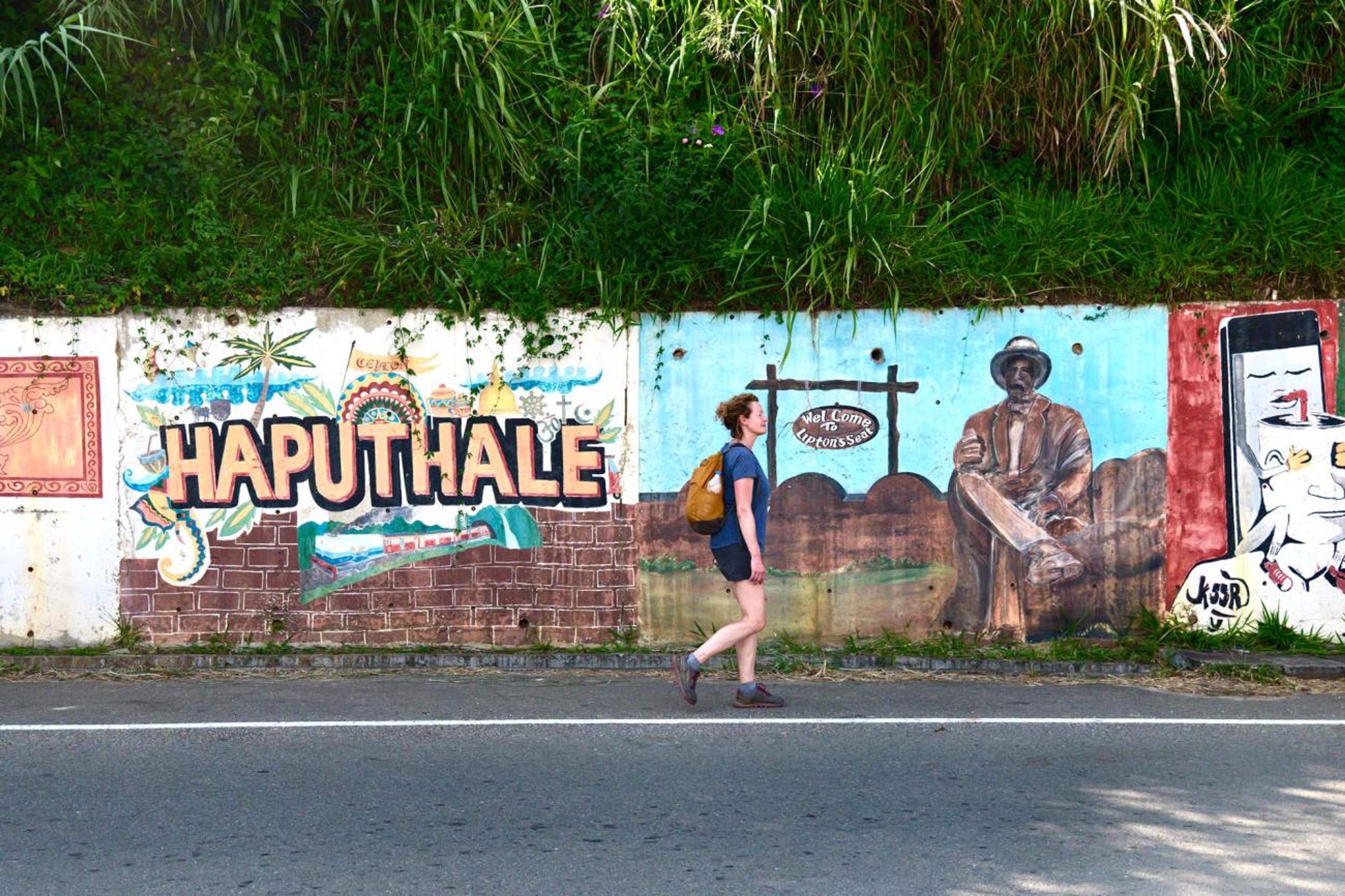
Sri Lanka already has famous trekking routes like Adam’s Peak and Horton Plains, but the Pekoe Trail stands apart because:
- it is long-distance and continuous
- it connects multiple regions instead of one summit
- it focuses on lived landscapes, not isolated viewpoints
- it allows flexible, sectional hiking
Final Thought - Why the Pekoe Trail Really Stays With You
The Pekoe Trail is not something you simply complete it’s something you experience in layers. At first, it’s about the views: endless tea estates rolling across the hills, mist drifting through valleys, and narrow paths that seem to disappear into the horizon. But slowly, without you even realizing it, it becomes something deeper. It starts shaping your pace, your thoughts, even your silence. You begin to notice things you normally rush past the sound of wind brushing through tea leaves, the distant rhythm of village life, the way light changes every few minutes in the highlands.
Built across Sri Lanka’s central hill country and spanning around 300 km through 22 carefully mapped stages, the trail connects not just places, but moments that feel almost suspended in time. And maybe that’s why people are so obsessed with it because in a world where everything is fast, loud, and constantly demanding attention, the Pekoe Trail quietly gives you permission to slow down. It doesn’t try to impress you. It just lets you exist differently for a while. And long after the hike ends, what stays isn’t just the memory of where you walked it’s the version of yourself you met along the way.