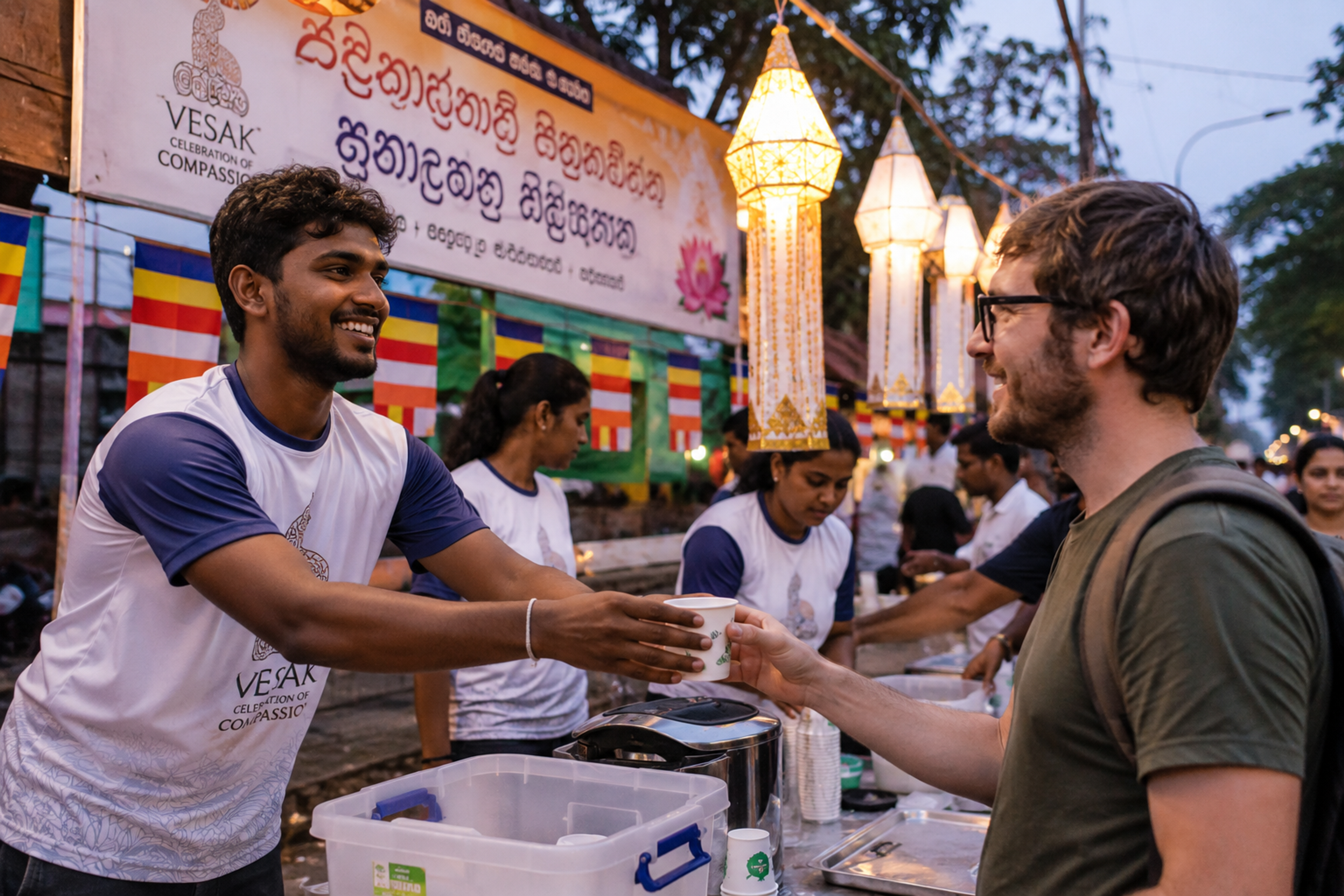
You're driving through Colombo on a warm May evening. Traffic slows. You roll down the window, and someone you've never met walks up and hands you a cup of sweet coffee - no charge, no catch, no loyalty card. Just a smile.
You've just had your first dansal moment.
If you've never heard of dansal (also spelled dansala), don't worry - most visitors to Sri Lanka haven't. It doesn't make it into the typical "must-see" lists. There are no ticket queues. There are no Instagram walls built around it. It's just people, feeding people, because they believe it's the right thing to do.
What Exactly Is Dansal?
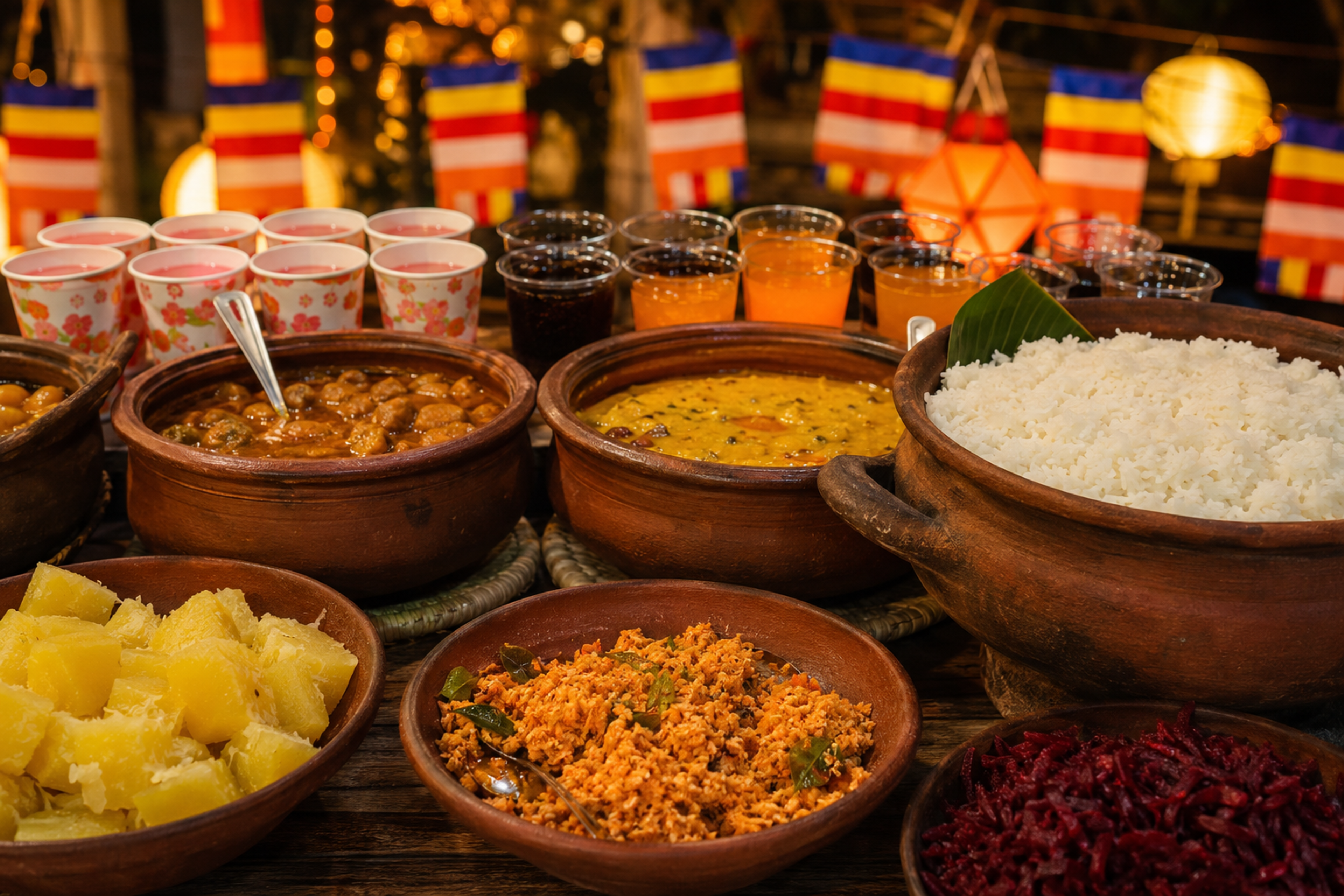
Dansal is the Sri Lankan tradition of setting up roadside stalls to give free food and drinks to anyone who passes by - no questions asked, no expectations in return. You might find rice and curry, soft drinks, ice cream, coffee, noodles, or fruit salad - all given out completely free of charge.
The word itself comes from the Pali concept of Dana, which means generosity or the act of giving. Dana is one of the most important virtues in Buddhism, rooted in charity and the spirit of giving without expectation. In Sri Lanka, that philosophy didn't stay inside temple walls. It walked out onto the street and set up a tent.
In ancient Sri Lanka, a dansala denoted the place where kings and the affluent donated food for the less fortunate. Written records in the Mahavamsa - the Sri Lankan chronicle spanning over 2,000 years of history - mention dansals operating during the reign of ancient kings. So when you accept a cup of cold sherbet from a stranger on a hot afternoon, you're participating in something that has been happening on this island for centuries.
When Does It Happen?
Dansal is most visible during Buddhist festivals - particularly Vesak and Poson Poya.
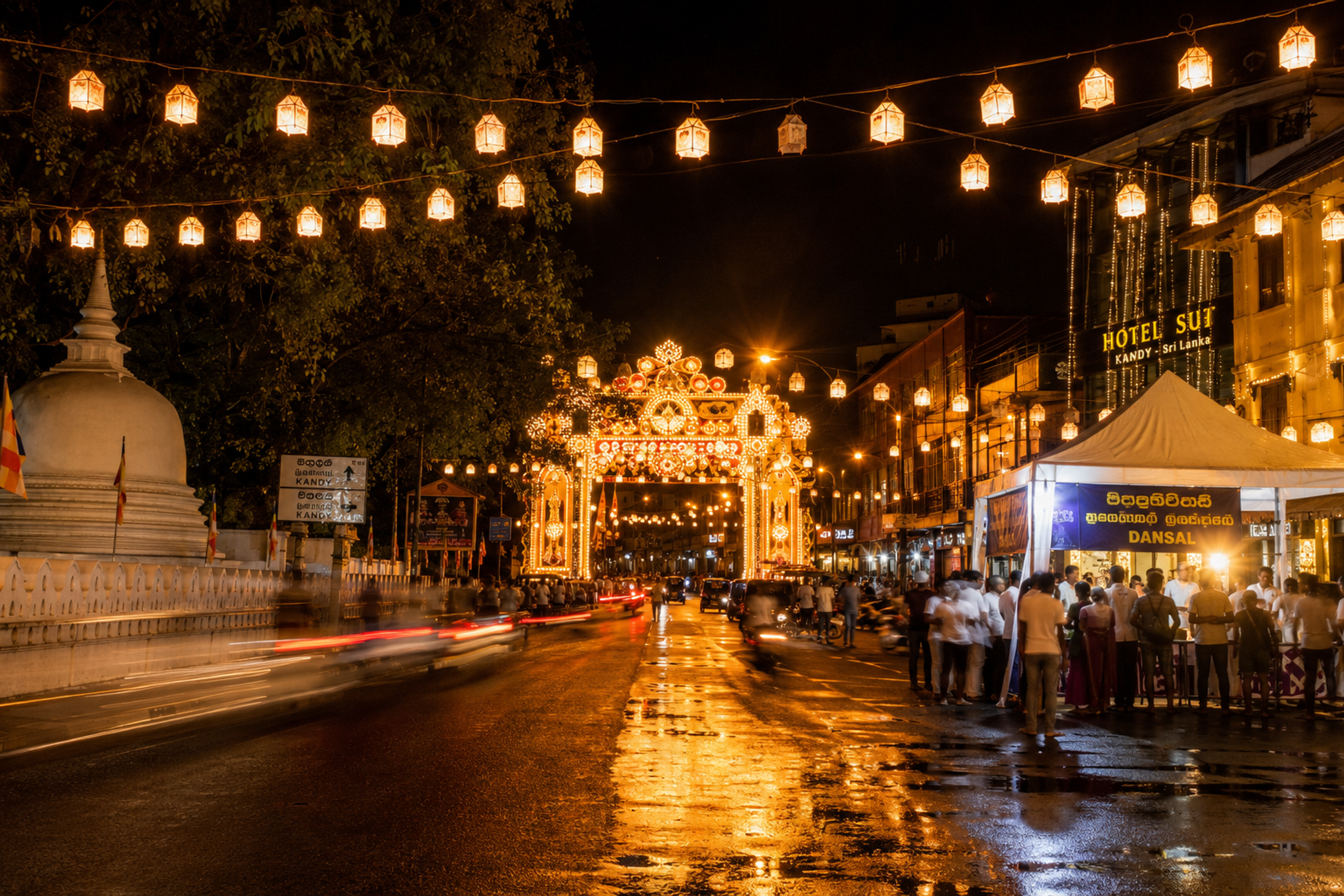
Vesak marks the birth, enlightenment and passing of Gautama Buddha, three moments observed on a single full moon day. It usually falls in May. Poson follows in June, commemorating the arrival of Buddhism in Sri Lanka. During both of these, the island transforms. Streets are decorated with lanterns and light installations called thorana, temples overflow with devotees, and dansals appear on nearly every major road.
Most dansal open in the evening when people travel out to see Vesak decorations, though some operate during the day as well. If you're driving between cities on a Poya night, expect your journey to take longer than Google Maps says - not because of traffic, but because you'll want to stop.
That said, dansal isn't strictly a once-a-year thing. Outside these festivals, smaller dansals still occur during other Buddhist holidays and charity events. Some families even host private dansal events to celebrate birthdays or anniversaries. The spirit of giving isn't confined to a calendar date.
What Happens at a Dansal?
Pull over (or just slow down - they'll come to you).
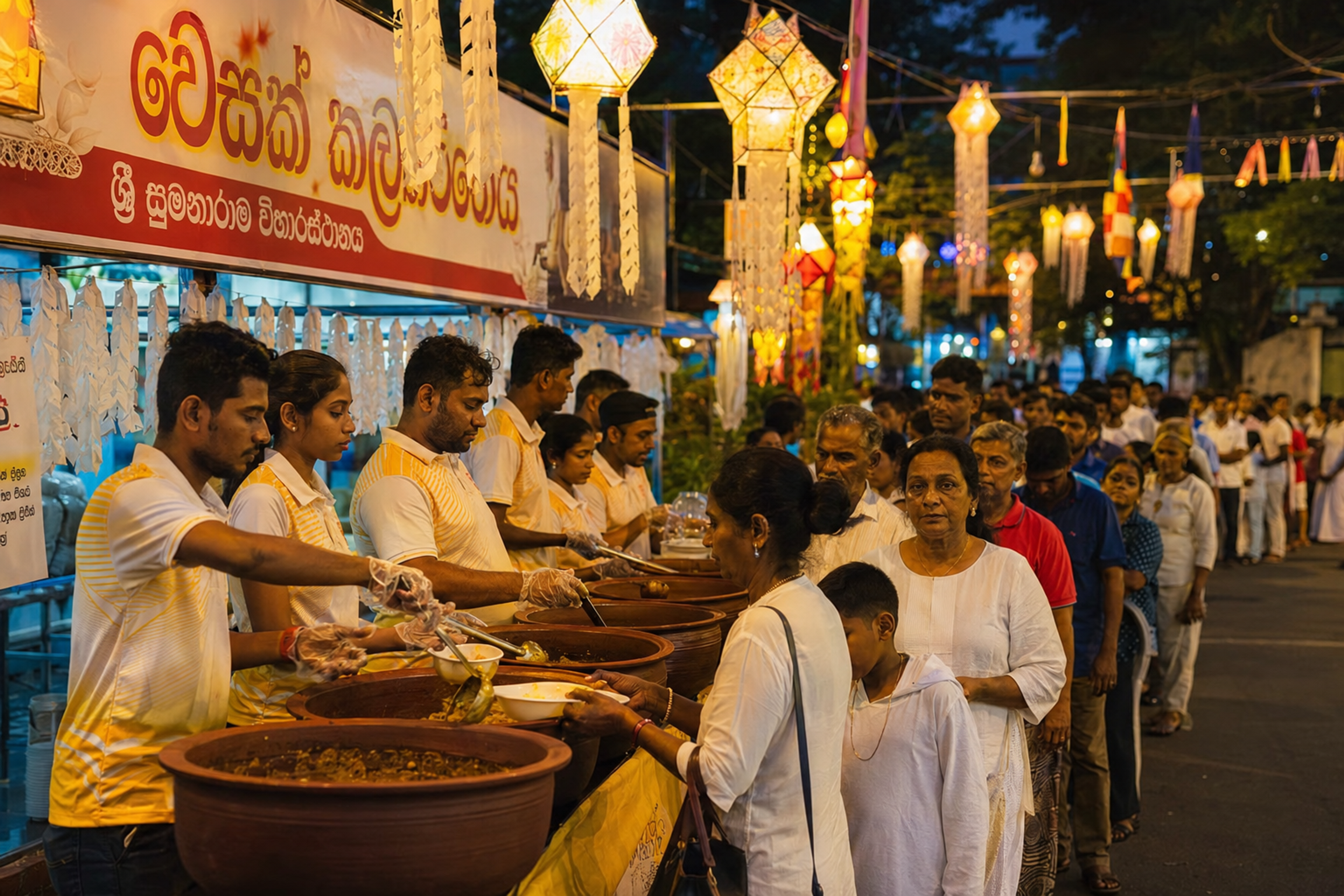
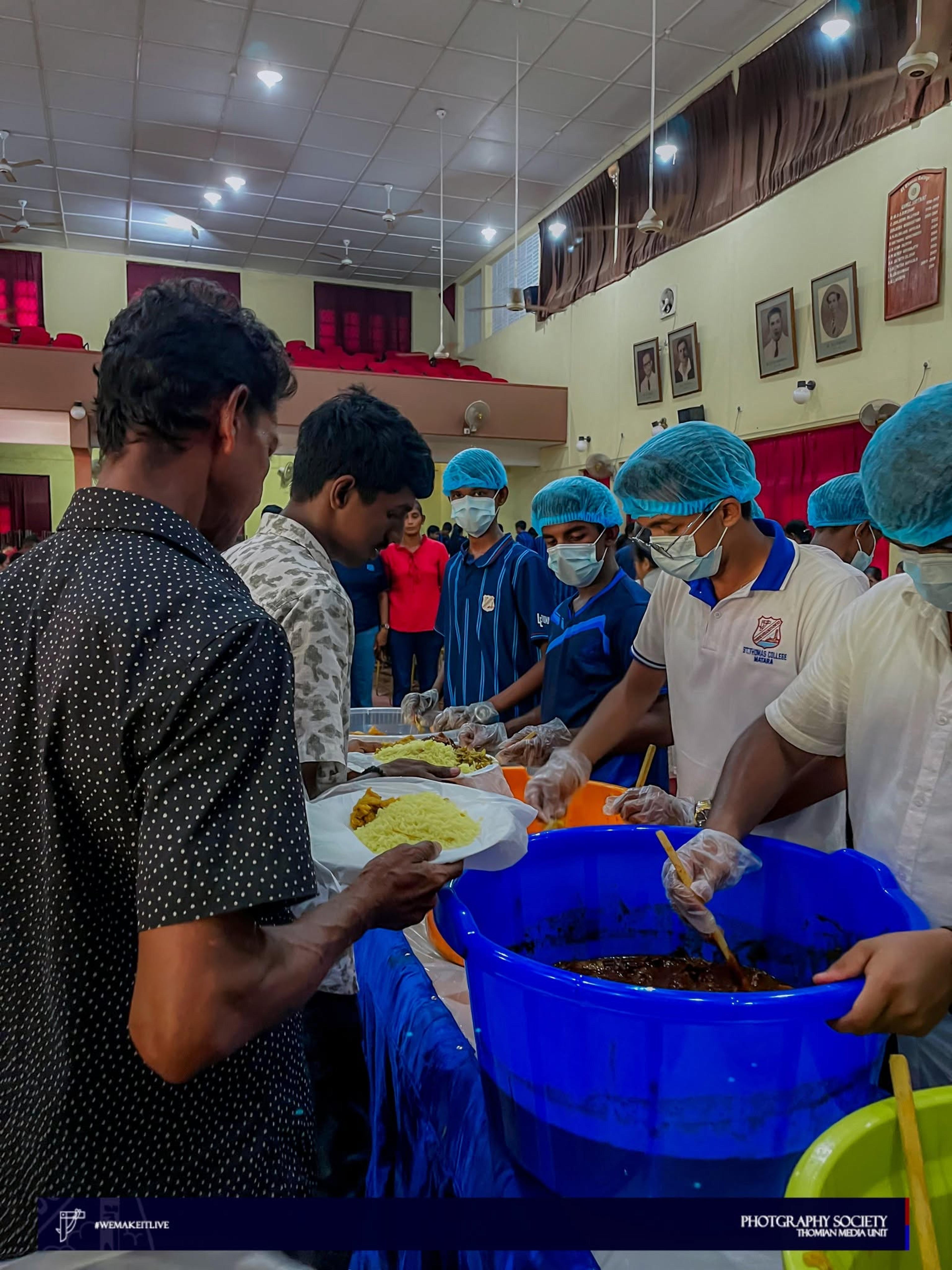
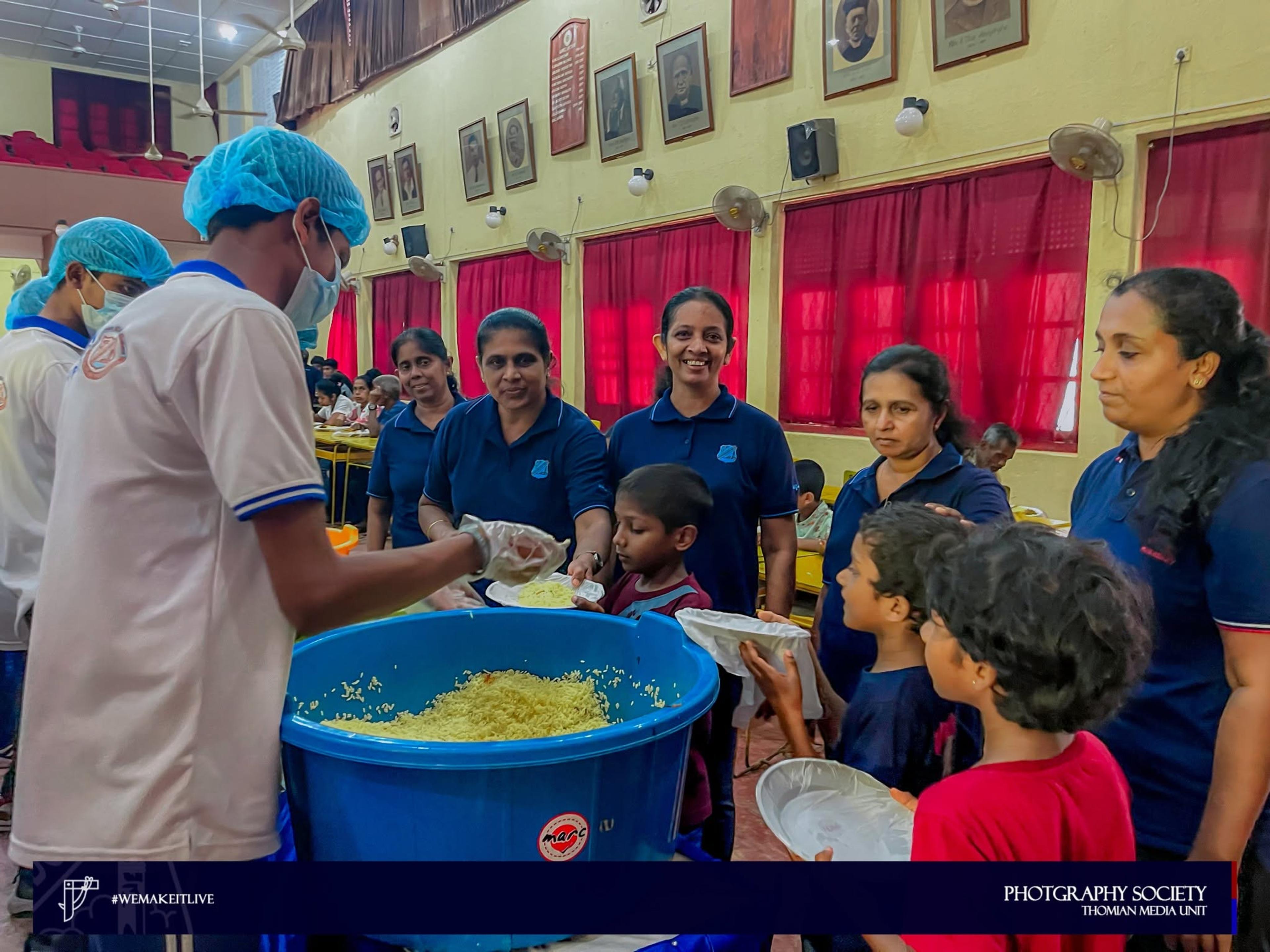
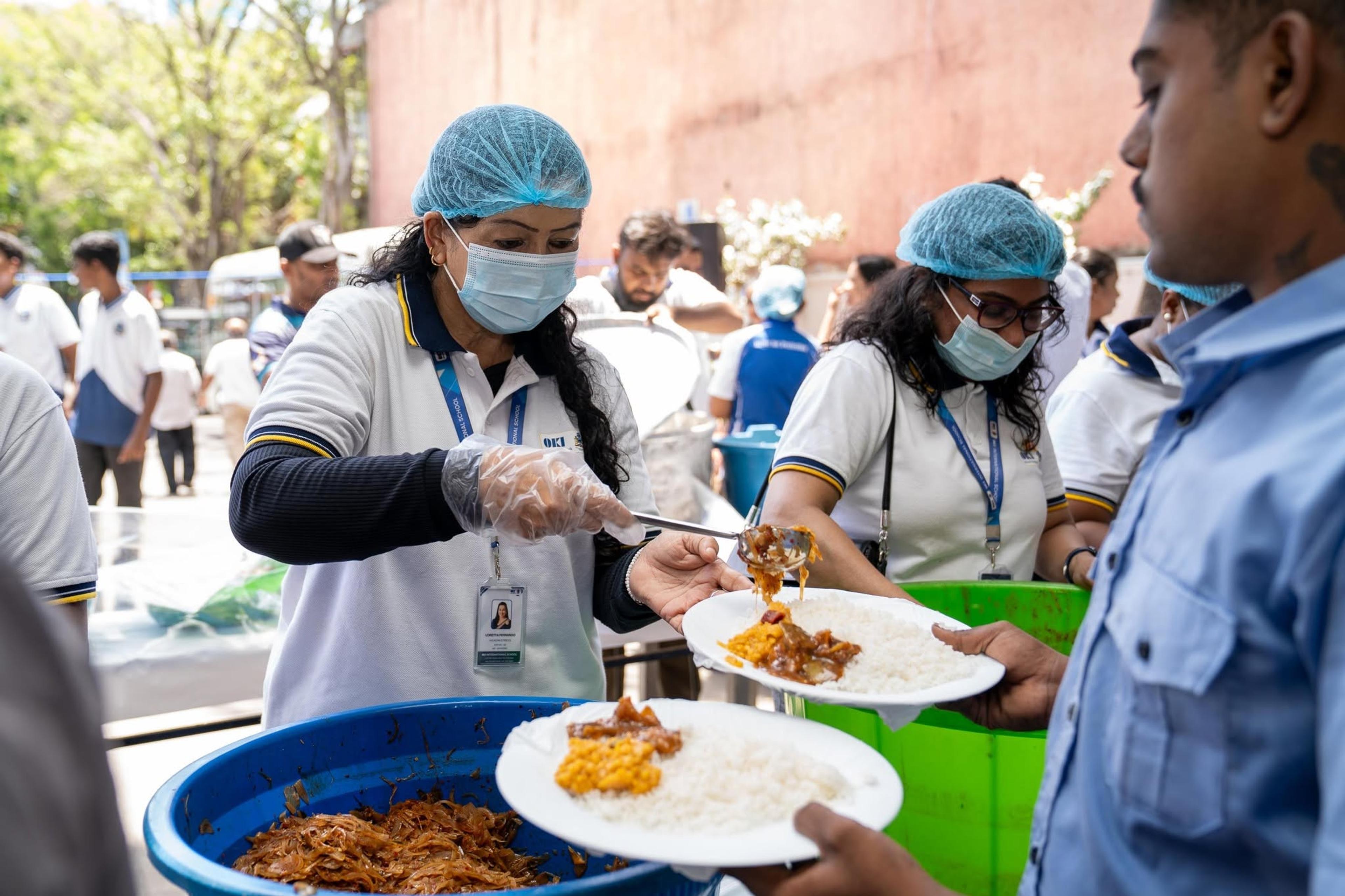
The décor is unmistakable: lanterns in different shades and shapes, the colours of the Buddhist flag. The aroma of food hangs in the air. Long queues form on the roadside, the young and old waiting patiently for their turn. At the busier ones, you'll find volunteers wearing matching shirts, moving efficiently between giant pots and rows of people holding plates.
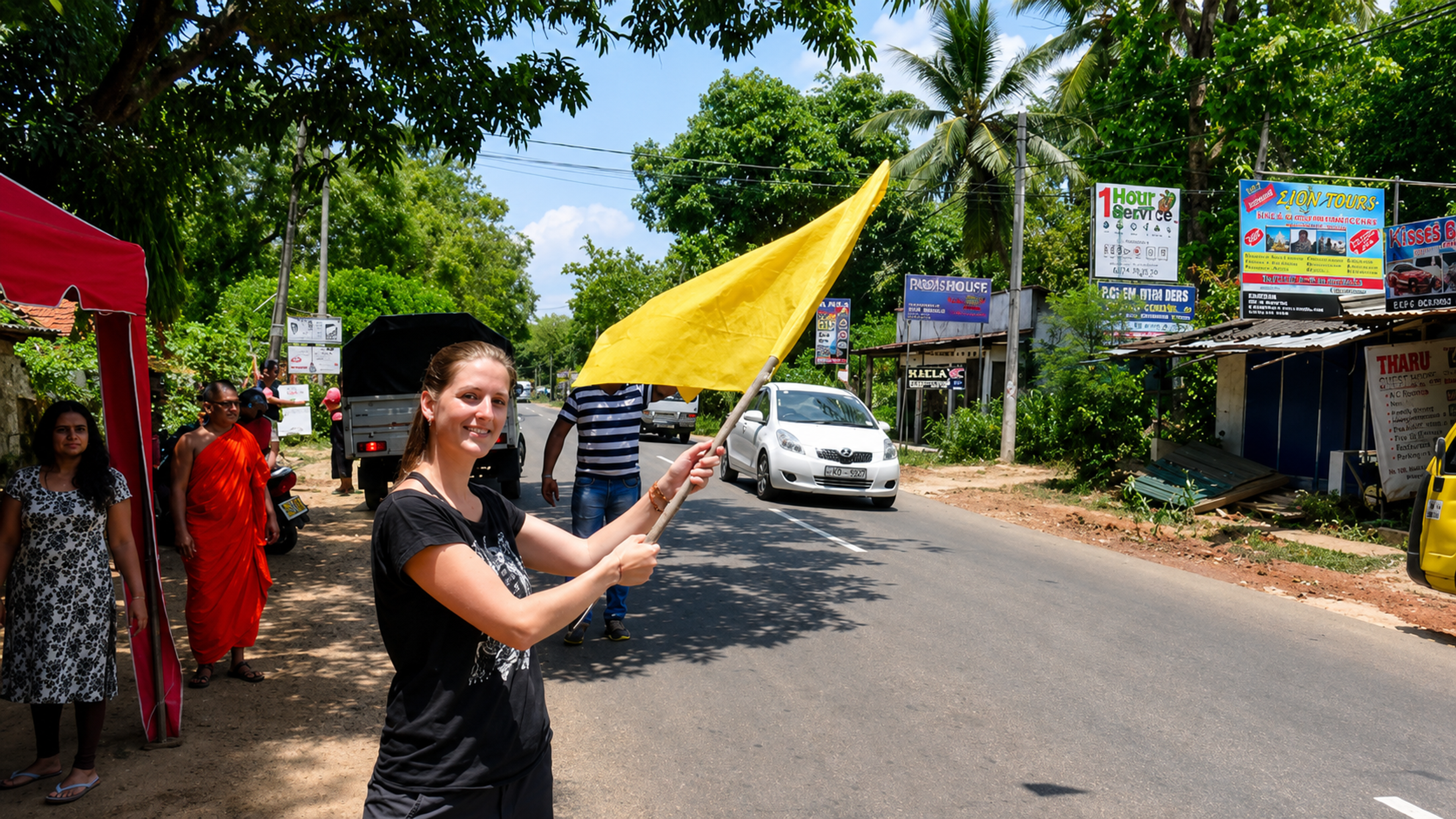
The food varies by neighbourhood. Some dansals are simple - a cup of karapincha (curry leaf) tea or boiled manioc with coconut sambol. Others are elaborate setups serving full rice-and-curry meals with multiple dishes. In Colombo, some groups go all out with ice cream, fresh juices, and even themed food stalls. Youth volunteers often flag down passing vehicles or cheerfully thrust a glass of drink toward a passerby.
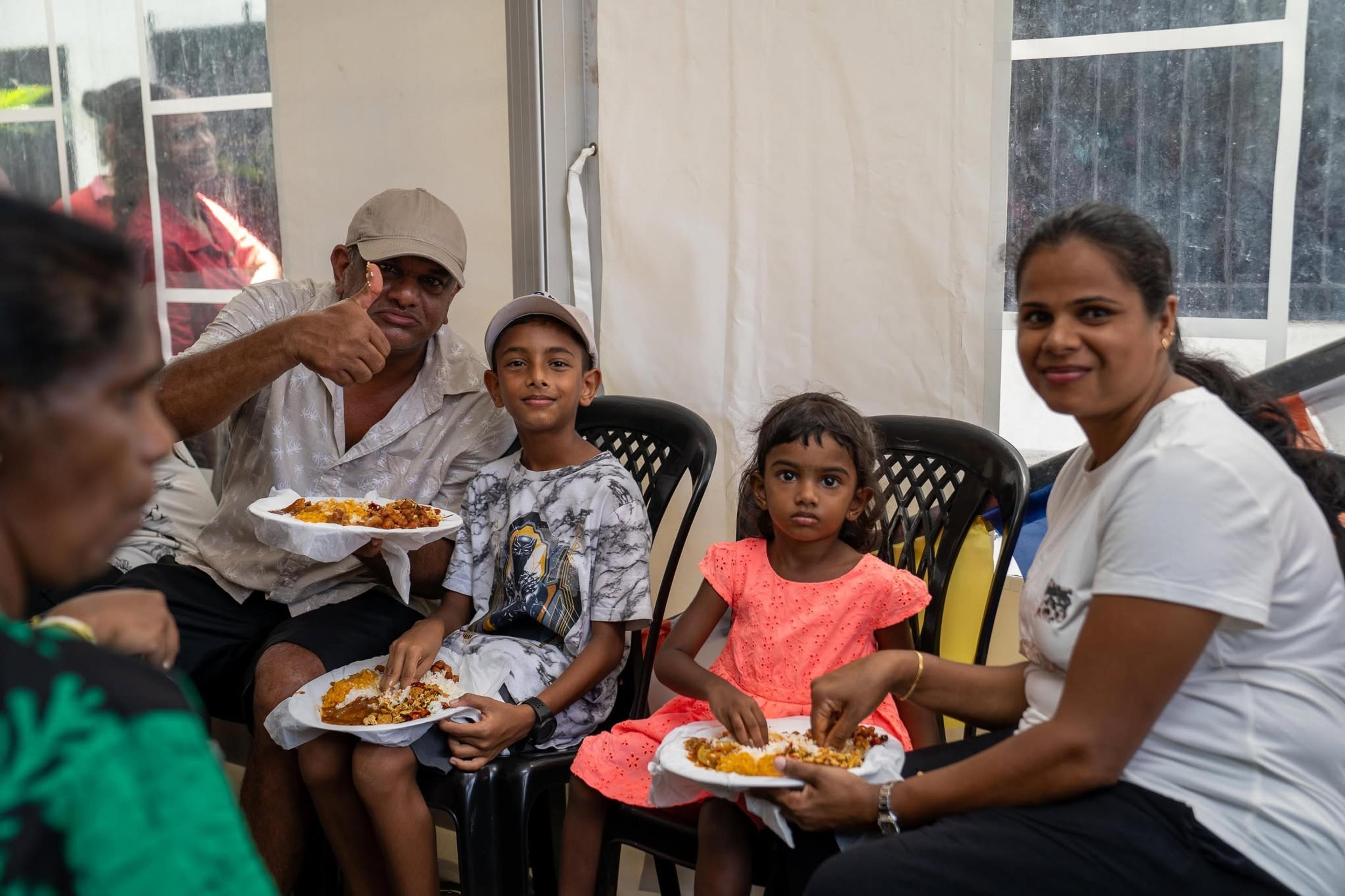
You might feel awkward accepting food from strangers. That's completely normal if you're from a culture where nothing is ever really free. But refusing the gesture can feel like rejecting the hospitality itself - which Sri Lankans extend with genuine warmth. Take it. Say bohoma isthuti (thank you very much). Watch what happens to the volunteer's face.
Who Runs These Stalls?
Almost anyone. Families, temples, businesses, and community groups all host dansal events at various times of the year. The scale varies wildly. Your neighbour down the road might set up a small table with a pot of ginger tea. A few streets away, a local business might have rented a marquee and is cooking for 2,000 people.
The food is bought and prepared using donations of money and dry rations from devotees. Operating a dansala and providing free food and drink is considered one of the most meritorious acts one can engage in during Vesak. The organisers aren't just feeding people. In their view, they're also building spiritual merit - doing something good, in hope that goodness returns.
Why Should Travellers Pay Attention?
There's no shortage of "cultural experiences" that get packaged up for tourists. Dansal isn't one of them. Nobody is performing for you here. The stalls don't charge foreigners a different rate (they don't charge at all). There are no guided tours to a dansal. You just show up - or rather, you're driving past and it finds you.
That quality is increasingly rare in travel. For travellers, the experience challenges expectations about hospitality anywhere in the world. It also challenges something quieter - the assumption that generosity comes with conditions.
If you're a first-time visitor to Sri Lanka, this is the thing that will probably stick with you more than the beaches or the wildlife. Not because it's spectacular, but because it's simple and it's real.
Practical Tips for Visitors
Time your trip around Poya. Vesak (May) and Poson (June) are the peak dansal seasons. Poya days shift slightly each year based on lunar cycles, so check Sri Lankan festival calendars before booking your trip.
Go out in the evening. The atmosphere is better after dark when the lanterns are lit and more families are out. Most of the bigger stalls come alive between 6 and 10 PM.
Don't overthink it. You don't need to be Buddhist, local, or even particularly hungry. Anyone is welcome. That's the whole point.
Dress modestly. If you're stopping near temples or more religious setups, covered shoulders and knees are appreciated.
Don't rush. Join the queue. Talk to the volunteers. The best part of dansal isn't the food.
Where to find them. Colombo, Kandy, and Anuradhapura have the highest concentration during Vesak. Most dansala are located in busy Vesak zones in Colombo and other major towns, beautifully decorated with lanterns and flags. But don't discount the smaller roadside setups in rural areas - those tend to feel more personal.
A Final Thought
Sri Lanka is a country that has been through a lot. Civil war, natural disasters, economic crises. And yet, every year, tens of thousands of ordinary people pool their money, wake up before dawn, cook enormous quantities of food, and give it away to strangers.
That's not naivety. That's something much harder - a deeply held belief that looking after people you don't know is worth doing anyway.
If you happen to be in Sri Lanka during Vesak or Poson, don't just drive past. Stop. Let someone hand you a plate of rice and curry on the side of the road. It will be one of the more quietly meaningful meals of your life.
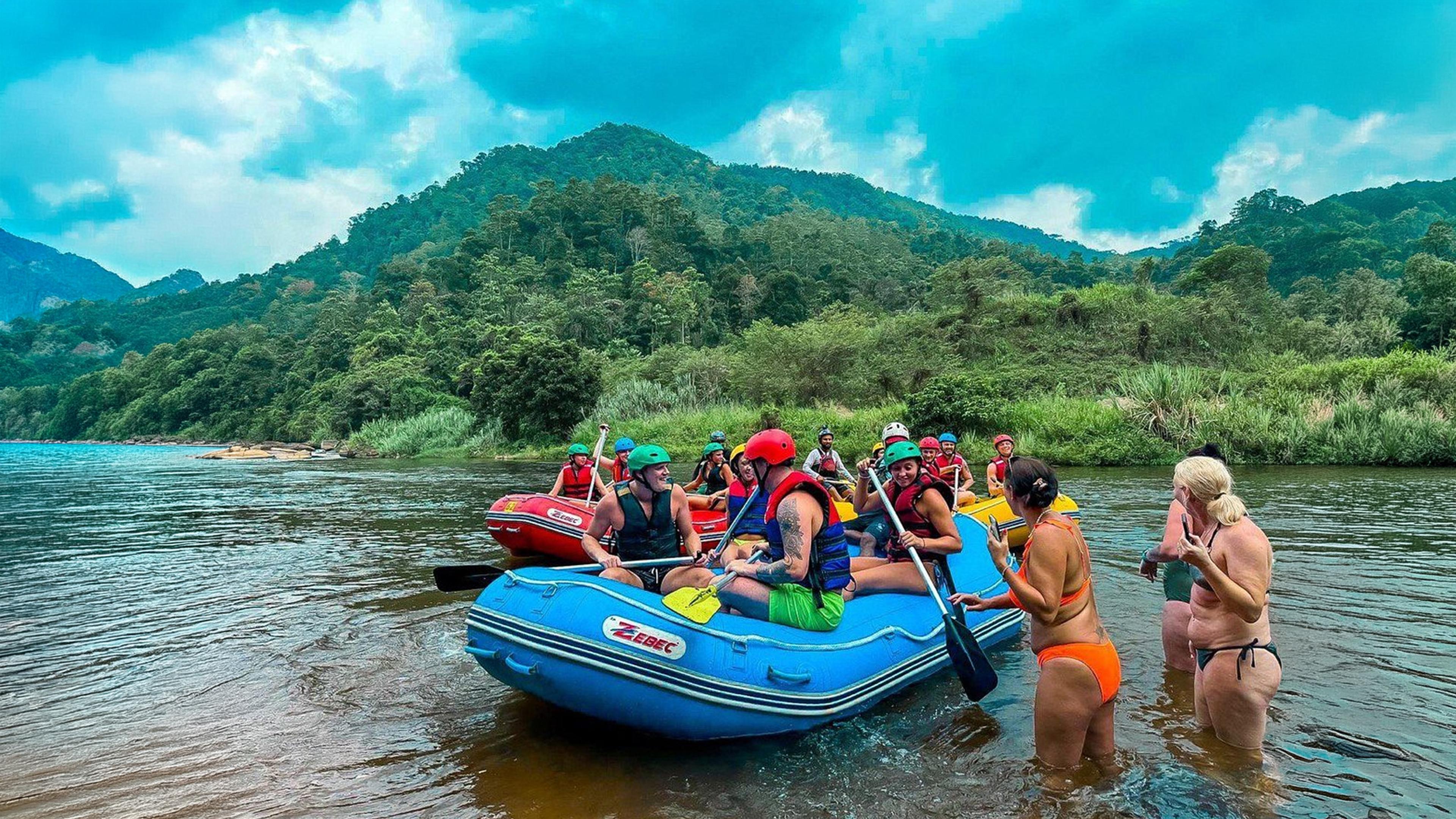
Planning a trip to Sri Lanka? Rapid Adventures runs experiences across the island - from white-water rafting in Kitulgala to village stays in Meemure - designed to get you closer to the real Sri Lanka. Visit rapidadventures.lk to explore what's on offer.
Source referenced: BBC Travel (May 2026)